

| The August 6th - 8th Jansen Fire, Southwest Of Lavina |
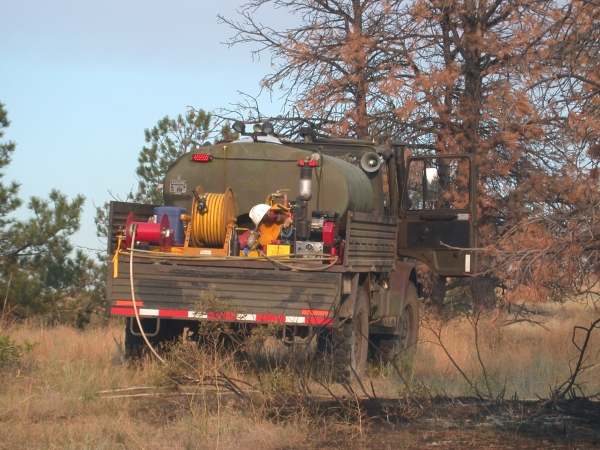
Late in the afternoon, we had returned from the mid-day Daum Fire and serviced Attack 1320, making it ready for the next response. We did not really expect the next fire so soon and we didn't make a point to recharge the camera battery. So, between the mop-up work at the Jansen Fire and the low battery, here are the photos. The Jansen Fire was tough to reach due to all manner of rough, steep and narrow dirt roads. Further, it was spread out over 300+ acres of rolling open range interspersed with steep gulches and cliffs. This made for very dangerous, nighttime, driving conditions. Mutual Aid was requested from Musselshell County and they dispatched a type 6 attack truck from the Dean Creek VFD. A DNRC (Montana Department of Natural Resources) Strike Team from Lewistown arrived with three trucks and a command vehicle early the following afternoon. There were four DNRC attack trucks, but one truck broke down upon arrival. Even the Golden Valley County road grader was called in to make a two-blade-wide fire break around the entire fire. This fire was caused by a number of nasty lightning strikes, along with high, erratic winds. There were spot fires everywhere and it was a hot night with a temperature of 79 degrees at 11PM. |
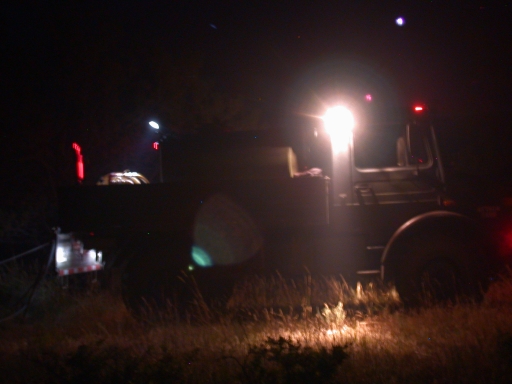
Getting organized. No, it does not look as though we parked in the black. None the less, the wind had ceased, the trucks were in a well burned out area with several escape routes, and we were several hundred feet from any significant spot fires. Misty Stratman with the Ryegate VFD and Jerard Jansen with the Lavina VFD were assigned to Attack 1320 and were a big help with the mop-up operations. Next time, Misty is supposed to bring along some comfy deck chairs. Misty, are you reading this? |
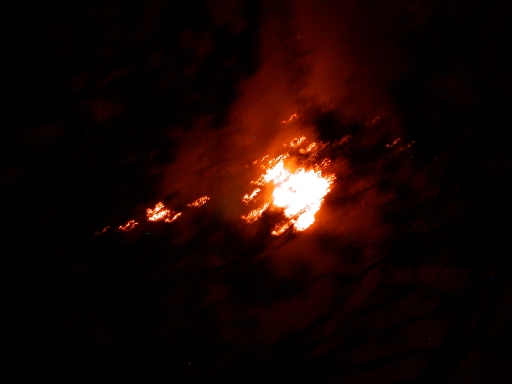
This photo shows a few spot fires and torching 500 feet away, across a gulch, burning up the far side. There were dozens of locations similar to this one. There is a photo further below, of the same area the following morning. |
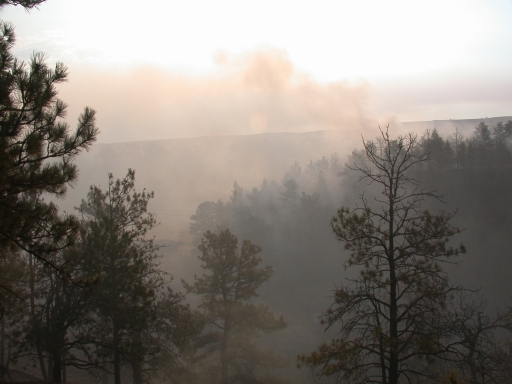
Sunrise. Yes, the sun really is there. We had to look through the camera lens several times, to be sure that we really had the sun in the shot. There were several local weather inversions during the night, which kept a great deal of the smoke confined to the immediate area. The mop-up worked continued. Soon after, there was the breakfast call. Here's thanking 53-33, aka Donna Jones for bringing out breakfast in the form of sandwiches and chips and drinks. Meals tend to occur around the tailgate of someone's pickup truck and everyone gets a chance to catch up on what's going on. |
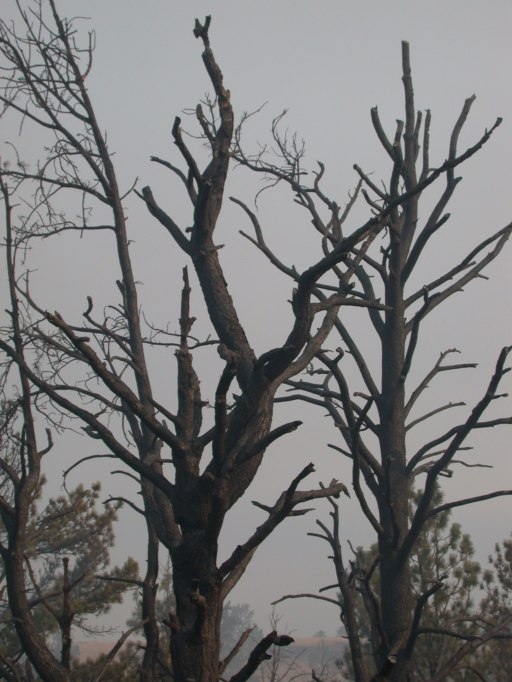
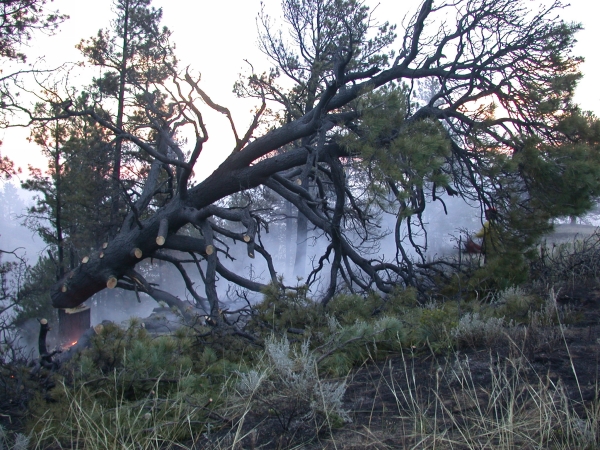
There were many sites like the one above, interspersed with un-touched Ponderosa Pines. These snags become very dangerous to work near. The inside often burns out and this can happen in hours or days. Entire trees fall with no warning, branches fall with no warning... with nothing more than the sound of a quiet whoosh. Other times, one hears a cracking sound. Of course, there is always the thud, by which time one realizes that it is too late. We heard several fall. One keeps an eye on the nearby trees. |
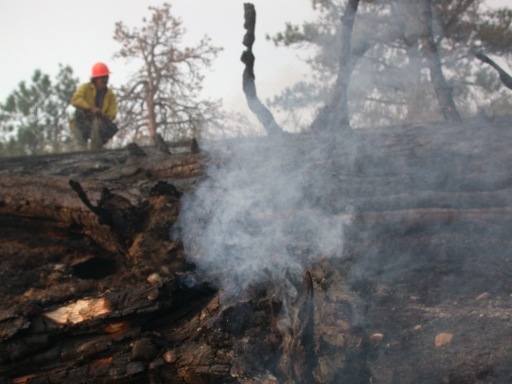
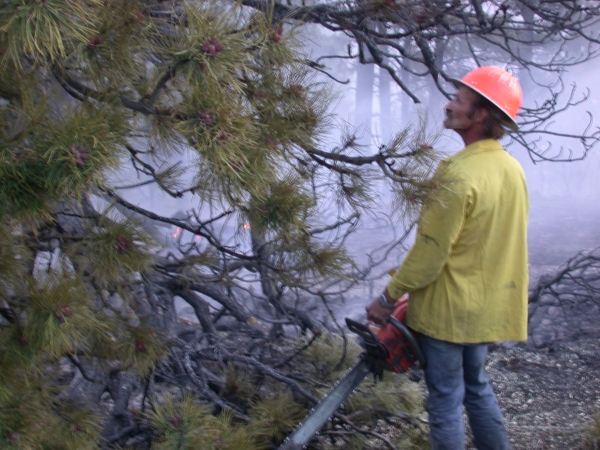
| Tim Stratman is taking a look at the area early the following morning. He too was out all night, assisting and cutting down the dangerous snags.. |
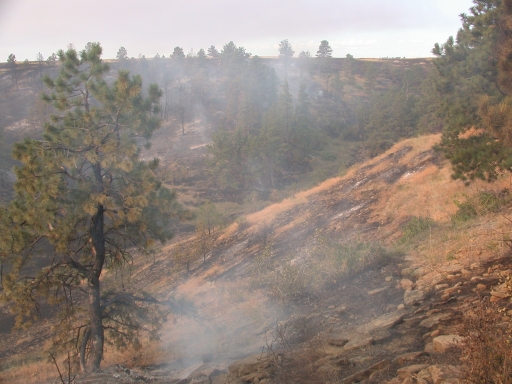
This is the early morning shot that gives a sense of where the spot fires were during the night. It's another view of the same gulch in the earlier, nighttime photo. The terrain may not look too rugged, but try hauling a hose up and down it. We wish we had photos of the really rugged parts, but the batteries in the camera were low and there were hours of work ahead. |
When It's All Over, Do You Really Get To Go Home And Put Your Feet Up? The short answer is, no. The long answer is that there's still equipment to take care of. The trucks tend to see long hours of rugged service and need maintenance. Everyone's pretty tired. But - someone has to: Fill the gas tank, fill the water tank, fill the foam tank, check the engine oil and the anti-freeze. Then there's the pump. It's also very useful to fill the pump's gas tank, the spare gas can, and check the oil. Did anything break? How are the hoses? Who's going to clean the windshield that's covered with ash, dust and insects? Then there is the PPE or Personal Protection Equipment - - - Nomex pants, shirts, hood, boots. Now some folks just stuff the gear right back into the turnout bag, while others like to let things dry out and air out. Canteens must be filled, flashlight batteries checked, shoe laces replaced, goggles cleaned, energy bars replaced.. and everyone is usually tired. If none of this is enough, there are the surprises, such as flat tires, a dead battery, a dead alternator, and the list goes on. There's more to a volunteer fire department than meets the eye. |